
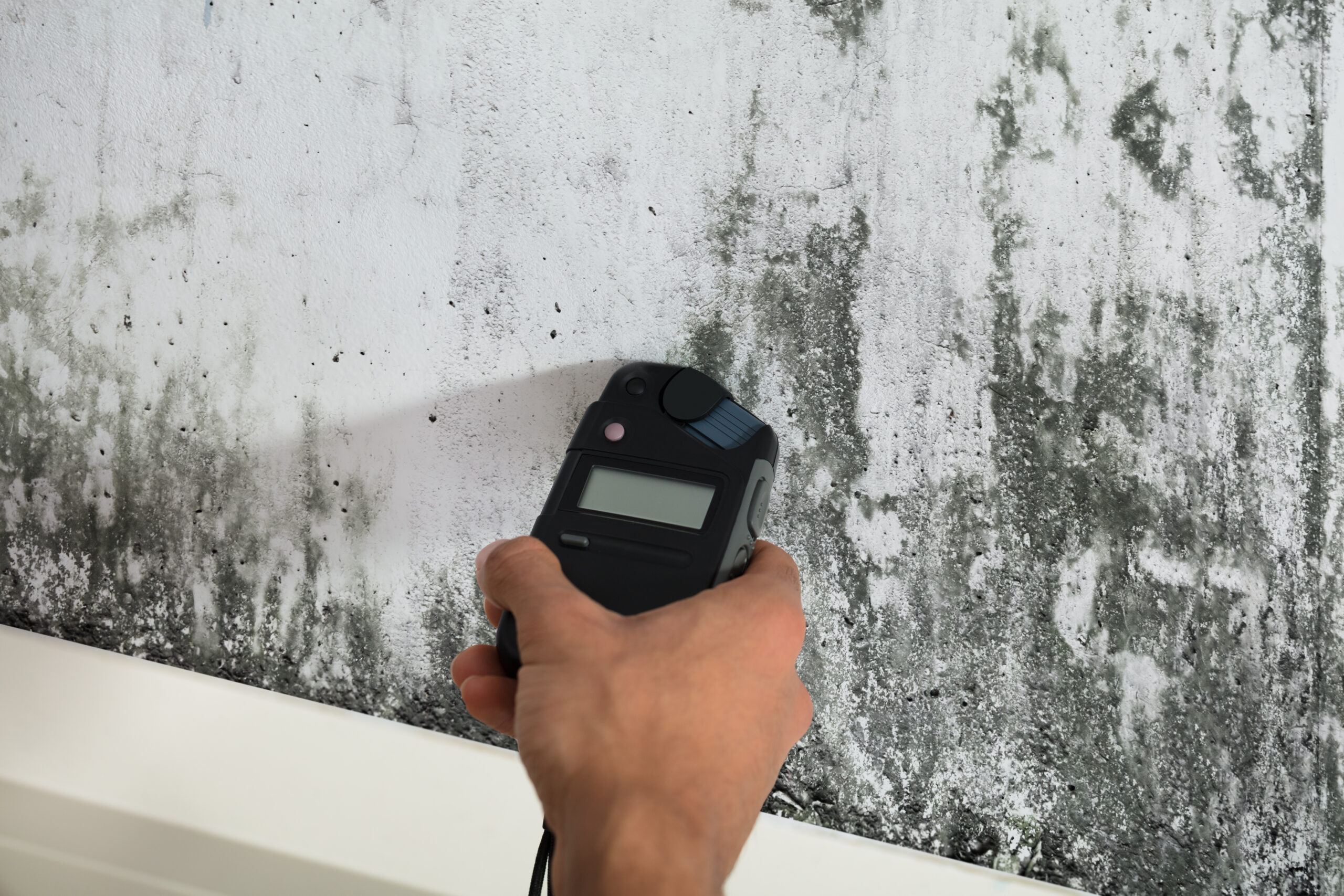
If you are concerned about mold in your home or business, you may hear two terms used frequently: mold inspection and mold testing. Although the terms are sometimes used interchangeably, they describe different parts of the process of evaluating a property for possible mold and moisture concerns.
A mold inspection focuses primarily on investigating the building and identifying conditions that may support mold growth. Mold testing involves collecting samples, such as air or surface samples, for laboratory analysis. In many situations, the most useful approach is to inspect the property first and then determine whether testing would provide meaningful additional information.
What Is a Mold Inspection?
A mold inspection is a professional evaluation of a property for visible mold, moisture problems, water damage, unusual odors, condensation, elevated humidity, and other environmental conditions that may contribute to mold growth. The inspection helps establish what is happening inside the building before decisions are made about sampling, remediation, or additional investigation.
During an inspection, the professional may evaluate basements, bathrooms, attics, walls, flooring, plumbing areas, HVAC-related areas, and other parts of the property where moisture is more likely to occur. The goal is not simply to find something that looks like mold, but to understand the conditions surrounding the concern and identify potential moisture sources.
What Does a Mold Inspector Look For?
A mold inspector may look for visible growth, water staining, deterioration of building materials, previous flood damage, plumbing leaks, roof leaks, condensation, unusual odors, and areas where moisture may be concealed. Moisture meters, humidity measurements, and other inspection tools may also be used depending on the situation.
The inspector is also looking at the building as a system. A musty basement, for example, may be connected to foundation seepage, elevated humidity, condensation on a cold surface, plumbing problems, or another moisture condition. Understanding the source is often just as important as determining whether mold is present.
What Is Mold Testing?
Mold testing refers to collecting samples from the property and having those samples analyzed by a laboratory. Sampling can provide additional information about mold that may be present in the air or on specific surfaces at the time the samples are collected.
Testing is most useful when there is a clear reason for collecting the samples. Instead of simply testing every room automatically, a professional inspection can help determine where samples should be taken and what information the testing is intended to provide.
What Is Air Sampling for Mold?
Air sampling involves collecting a measured amount of air from selected areas of the property. The samples are then analyzed to identify mold spores or other fungal material captured during the sampling period.
Air samples provide information about the conditions present at a particular location and time. Because conditions can vary throughout a building, sample placement should be based on the inspection findings, the layout of the property, and the specific concerns being investigated.
What Is Surface Sampling for Mold?
Surface sampling focuses on a particular material or suspicious area rather than the general air within the property. Depending on the situation, a professional may collect a swab, tape sample, or another form of surface sample from an area of concern.
This type of testing may be useful when visible growth or suspicious discoloration is present and additional identification is desired. Surface sampling may also be useful in certain post-remediation situations when additional information is needed about a previously affected area.
Mold Testing vs. Mold Inspection: What Is the Main Difference?
The simplest distinction is that a mold inspection investigates the property, while mold testing analyzes samples. An inspection helps determine what conditions exist within the building, while testing provides laboratory information about material collected from selected areas.
The two services therefore answer different questions. A mold inspection asks, “What is happening inside this building and why?” Mold testing asks, “What was present in the air or on the surface that was sampled?” Used together when appropriate, they can provide a much clearer understanding of the property.
Do You Need Mold Testing During Every Inspection?
Not every mold inspection requires laboratory testing. If mold is already clearly visible and the moisture source is obvious, additional sampling may not always provide information that changes the recommended next step.
Testing becomes more valuable when the situation is uncertain, mold is suspected but not visible, several areas need to be compared, documentation is important, or the results could affect a decision about remediation or the property. The key is to use testing intentionally rather than treating it as an automatic requirement for every inspection.
Why Should the Inspection Usually Come First?
Starting with an inspection allows the testing strategy to be based on what is actually happening inside the property. Without inspecting the building first, samples may be collected from areas that do not provide the most useful information.
For example, a homeowner may call because a finished basement smells musty. An inspection might uncover elevated moisture behind a wall, a slow plumbing leak, basement seepage, condensation, or another condition that helps determine where testing should be performed and what type of sampling makes sense.
Why Is Moisture So Important During a Mold Inspection?
Moisture is one of the most important factors connected to indoor mold growth. Even if mold is cleaned or removed, a continuing water or humidity problem can allow the issue to return.
Potential moisture sources can include plumbing leaks, roof leaks, foundation seepage, elevated humidity, condensation, flooding, poor ventilation, and previous water damage. This is why identifying and correcting the underlying moisture condition is an essential part of properly addressing a mold concern.
Can Mold Grow Without a Visible Leak?
Yes. Mold does not always require an obvious plumbing leak, roof leak, or standing water. Condensation and elevated humidity can create enough moisture at certain surfaces to support mold growth even when the room appears dry.
Cold exterior walls, areas behind furniture, bathrooms with poor ventilation, basements, and enclosed cabinets can all develop localized moisture conditions. That is one reason an inspection should look beyond obvious water damage and consider humidity, airflow, condensation, and surface conditions.
Can a Mold Inspection Find Hidden Mold?
A mold inspection can sometimes identify evidence suggesting that hidden mold or hidden moisture may be present. Musty odors, elevated moisture readings, water stains, damaged materials, previous leaks, and unusual conditions behind flooring or walls can all justify further investigation.
However, an inspector cannot see through every wall or finished surface. When hidden mold is suspected, the next step may involve additional moisture evaluation, targeted sampling, or further investigation depending on the property and circumstances.
Can Mold Grow Behind Walls?
Mold can develop behind walls when moisture reaches drywall, insulation, wood, or other building materials and remains there long enough. Plumbing leaks, water intrusion, condensation, and previous flooding are common reasons moisture may become trapped inside a wall assembly.
A wall can sometimes appear completely normal from the room side even though moisture is present behind the finished surface. This is why moisture measurements, inspection history, odors, staining, and other clues are important when investigating possible hidden problems.
Can Mold Grow Under Flooring?
Moisture can also become trapped beneath flooring materials. Leaking appliances, plumbing problems, flooding, foundation moisture, and spills that were not properly dried can allow water to reach subflooring or other concealed materials.
Because the affected area is covered, the first noticeable signs may be odors, discoloration, warping, loose flooring, or changes in the material. A professional evaluation can help determine whether additional moisture investigation is warranted.
Can Mold Grow Behind Furniture?
Furniture positioned tightly against a cold exterior wall can reduce airflow around the wall surface. During colder weather, this can contribute to a small microclimate where the surface remains colder and humidity near the wall becomes higher than in the rest of the room.
Homeowners may not discover the condition until a dresser, bed, cabinet, or other piece of furniture is moved. Periodically checking areas behind large furniture—especially along exterior walls—can help identify condensation or moisture concerns earlier.
Does Mold Testing Tell You Whether a Home Is Safe?
Mold testing should not be viewed as a simple pass-or-fail test for an entire property. Laboratory results provide information about the specific samples collected, but those results need to be interpreted alongside the building conditions and inspection findings.
Factors such as sample location, visible growth, moisture conditions, outdoor conditions, the reason for testing, and the history of the property all provide important context. This is why simply receiving laboratory numbers without understanding the building can create more questions rather than clearer answers.
When Is a Mold Inspection Especially Helpful?
A professional mold inspection may be appropriate when you notice persistent musty odors, visible growth, recurring moisture, previous flooding, plumbing leaks, water staining, condensation, or unexplained deterioration of building materials. It may also be useful when you suspect a hidden problem but cannot identify the source.
Inspections can also provide valuable information during real estate transactions, after water damage, before major renovation work, or when mold appears repeatedly after previous cleanup. The purpose is to determine what conditions exist and what should happen next.
When Is Mold Testing Especially Helpful?
Mold testing can be valuable when the suspected problem is not clearly visible, when additional documentation is necessary, when different areas of the building need to be evaluated, or when sampling results would influence decisions about remediation or additional investigation.
Testing may also be considered following remediation when additional verification is desired. The appropriate sampling strategy depends on the situation, which is another reason the property should usually be evaluated before samples are collected.
Mold Testing for Home Buyers
Home buyers may encounter signs of possible environmental concerns during a showing or home inspection. Musty odors, water stains, previous basement flooding, suspicious discoloration, or evidence of past repairs can all lead to questions about mold and moisture.
A specialized mold and moisture evaluation can provide additional information beyond a standard home inspection when a specific environmental concern exists. Understanding the issue before closing can help buyers make a more informed decision about the property.
Mold Inspection for Home Sellers
Sellers may also benefit from investigating a known moisture or mold concern before listing a property. Addressing an issue proactively can provide more clarity when buyers begin asking questions during the inspection process.
If a property has experienced water damage, basement seepage, roof leaks, or previous mold concerns, understanding the current condition may also make it easier to communicate accurately with prospective buyers and real estate professionals.
Mold Inspection for Property Managers
Property managers frequently encounter complaints involving musty odors, visible mold, condensation, water damage, and disagreements about the source of environmental conditions. An independent professional evaluation can help establish objective information about what is happening inside the property.
This can be especially valuable in apartments, multi-family properties, rental homes, and commercial buildings where multiple parties may be involved. Clear inspection findings can help property managers determine the most appropriate next step.
Mold Testing Before Remediation
Testing before remediation can sometimes provide useful information about the areas being evaluated and the conditions present before work begins. Whether testing is necessary depends on the specific situation and what information is needed.
The larger priority is making sure the moisture source and the extent of the affected area are properly understood. Remediation without addressing the underlying moisture condition may result in the problem returning later.
Mold Testing After Remediation
Post-remediation evaluation may be performed after mold remediation work has been completed. Depending on the project, this may include a visual assessment, moisture evaluation, surface sampling, air sampling, or a combination of methods.
The purpose is to evaluate conditions after the work rather than simply assuming that everything has been resolved. The appropriate approach depends on the original problem, remediation scope, and the goals of the property owner or other involved parties.
What Does Elite Indoor Air Look for During an Evaluation?
Elite Indoor Air evaluates the property as a whole rather than focusing only on one sample or one visible spot. An evaluation may involve looking for moisture intrusion, condensation, elevated humidity, water damage, visible mold, unusual odors, ventilation conditions, and other environmental concerns.
When testing is appropriate, air or surface samples can be collected and sent for laboratory analysis. The goal is to connect the testing results with what is happening inside the building so property owners receive information they can actually use.
Does Elite Indoor Air Provide Mold Testing in Waukesha?
Yes. Elite Indoor Air provides mold inspections, indoor air quality testing, moisture evaluations, air sampling, and surface sampling for homeowners, buyers, sellers, property managers, and businesses throughout Waukesha and surrounding Wisconsin communities.
For qualifying projects, Elite Indoor Air currently offers a $550 mold and indoor air testing package that includes five air samples and two surface swabs. Additional samples are available for $65 each, depending on the needs of the property.
Mold Testing vs. Mold Inspection: Which One Do You Need?
If you are unsure which service you need, you do not have to determine that yourself before calling. Start by explaining what you are noticing, such as a musty odor, visible growth, previous water damage, staining, a leak, or another concern.
From there, the property can be evaluated and an appropriate strategy can be recommended. Some situations primarily require an inspection, some benefit from laboratory testing, and others may benefit from both.
Schedule a Mold Inspection or Mold Test in Waukesha, WI
If you are concerned about mold, moisture, water damage, or unusual conditions inside your home or property, Elite Indoor Air can help you investigate the issue and better understand what may be happening.
Rather than guessing based on appearance alone, start with a professional evaluation designed around the actual property and concern. Inspect the property. Test when appropriate. Get clearer answers.
Frequently Asked Questions
What is the difference between mold testing and mold inspection?
A mold inspection evaluates the building for visible mold, moisture, leaks, humidity, water damage, and conditions that may support mold growth. Mold testing involves collecting air or surface samples for laboratory analysis.
The two services can complement each other, but they provide different types of information. The inspection provides context about the building, while testing provides information about the particular samples that were collected.
Is mold testing always necessary?
No. Some situations can be understood through a visual and moisture inspection without laboratory sampling, particularly when the mold and moisture source are already obvious.
Testing is more useful when additional information would affect the next decision, when hidden mold is suspected, when documentation is needed, or when post-remediation evaluation is being performed.
Can you have a mold inspection without testing?
Yes. A professional can evaluate the building for mold and moisture conditions without collecting samples. In some situations, the inspection findings may provide enough information to determine the next appropriate step.
If additional questions remain after the inspection, testing can then be recommended based on the specific areas and concerns identified during the evaluation.
Can you have mold testing without an inspection?
Samples can technically be collected without a comprehensive inspection, but the resulting information may be less useful without building context. Knowing where moisture exists and why an area was selected for sampling helps make the laboratory results more meaningful.
An inspection-first approach also allows the professional to select sampling locations strategically rather than collecting samples randomly throughout the property.
Can mold testing find hidden mold?
Testing may provide information that supports further investigation, but an air sample does not automatically identify the exact location of hidden mold. Concealed growth often requires evaluation of moisture conditions and the surrounding building materials.
When hidden mold is suspected, professional judgment is important in deciding whether additional moisture evaluation, targeted sampling, or further investigation is appropriate.
Does mold testing provide a pass-or-fail result?
Mold testing is not normally a universal pass-or-fail test for an entire home. Laboratory findings need to be interpreted within the context of the property, sampling strategy, moisture conditions, and purpose of the evaluation.
A professional should therefore consider the laboratory information together with what was observed during the inspection instead of relying on one number alone.
What should come first: mold inspection or mold testing?
In many situations, the inspection should come first. Evaluating the building helps identify areas of concern, possible moisture sources, and the locations where sampling could provide the most useful information.
Testing can then be performed when appropriate. This creates a more intentional process in which samples are collected to answer specific questions rather than simply being collected because mold is suspected.