
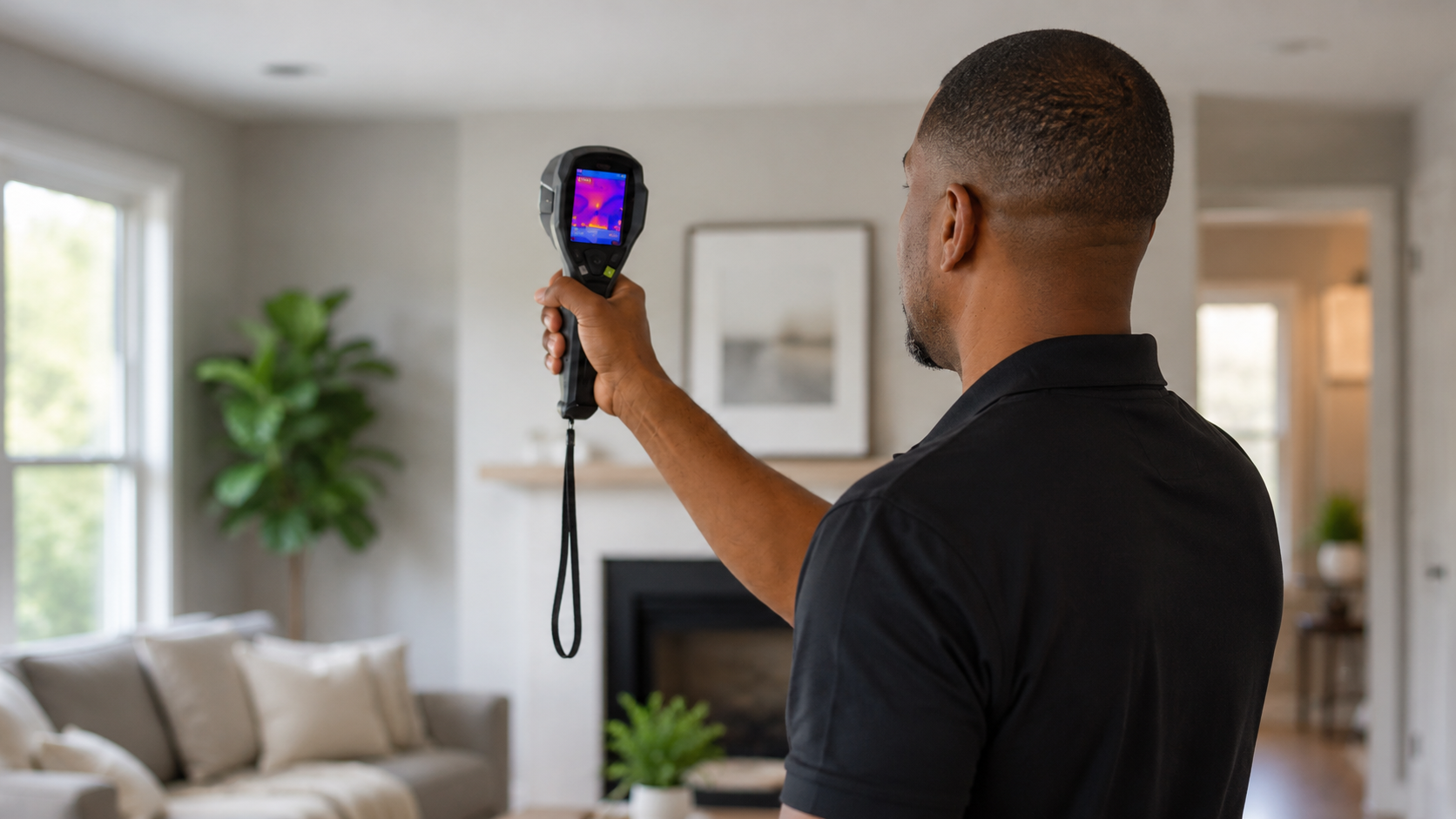
Indoor air quality problems are not always easy to see. A home or business can look clean and still have moisture concerns, hidden mold, recurring odors, airborne particles, or ventilation issues affecting the indoor environment.
That is why a professional indoor air evaluation can be so valuable. Rather than guessing at the cause of a problem or immediately purchasing a product, an evaluation can help identify conditions that may be contributing to poor indoor air quality and provide better information about what to do next.
At Elite Indoor Air LLC, indoor air evaluations are designed to look beyond the surface. The goal is to better understand the property, identify potential concerns, and help homeowners and businesses make informed decisions about testing, remediation, ventilation, purification, and other indoor air quality solutions.
Moisture Problems
Moisture is one of the most important factors affecting indoor air quality. Water can enter a building through roof leaks, plumbing failures, foundation seepage, window leaks, condensation, appliance problems, or flooding. In other cases, moisture develops gradually because indoor humidity remains too high.
The challenge is that moisture does not always remain visible. Water can collect behind drywall, beneath flooring, around windows, under cabinets, inside insulation, or within other concealed building materials. A wall may appear dry while moisture remains behind it.
During an indoor air evaluation, visible conditions and the property’s moisture history can help determine whether certain areas deserve closer attention. Persistent dampness, water stains, peeling paint, warped materials, condensation, or musty odors may all be signs that moisture is affecting the property. Understanding where moisture is coming from is often one of the most important steps toward improving the indoor environment.
Mold Concerns
Mold and moisture are closely connected. When building materials remain damp, conditions may develop that allow mold to grow. Sometimes mold is visible. Other times, it may be located behind walls, beneath flooring, inside cabinets, around plumbing, or in other concealed areas.
An indoor air evaluation can help identify conditions that may warrant mold testing or further investigation. For example, recurring musty odors, previous flooding, foundation seepage, roof leaks, plumbing leaks, visible discoloration, or persistent condensation may suggest that moisture-related conditions should be examined more closely. A professional evaluation is particularly useful when homeowners know something seems wrong but cannot determine the source. The goal is not simply to assume that every stain or odor means mold. It is to gather enough information to determine whether additional mold detection, testing, or remediation may be appropriate.
Persistent or Unusual Odors
Odors are one of the most common reasons people begin questioning their indoor air quality. A property may smell musty, damp, stale, smoky, or simply different than usual. Air fresheners and fragrances may temporarily cover the smell, but they do not explain why the odor exists.
A professional indoor air evaluation can help investigate whether an odor may be connected to moisture, ventilation, building materials, HVAC airflow, previous water damage, or another environmental condition. The timing and location of an odor can provide valuable clues.
A smell that becomes stronger after rain may point toward moisture intrusion. An odor that appears when the HVAC system starts may be moving through the building with the airflow. A musty basement smell may be associated with elevated humidity or damp materials. Identifying the source is usually much more useful than simply masking the symptom.
Airborne Particles
Many indoor air contaminants are too small to see. Dust, pollen, pet-related particles, renovation debris, smoke particles, and other airborne material may circulate through a home or business even when surfaces appear clean.
Professional air analysis and indoor air evaluation can help provide more information about conditions that may be contributing to airborne particle concerns. The source may be related to outdoor air entering the building, construction activity, filtration, HVAC operation, cleaning practices, occupancy, or other factors.
For example, a home undergoing renovation may experience fine dust traveling beyond the work area through doorways and vents. A business with high foot traffic may experience different indoor air conditions than a lightly occupied home. An evaluation can help look at these conditions in context rather than treating particle levels as an isolated problem.
Ventilation and Airflow Problems
A room that feels stale or stuffy may have a ventilation or airflow problem. Ventilation plays an important role in replacing stale indoor air and managing humidity, odors, and occupancy-related conditions.
Poor airflow can develop for many reasons. Return vents may be blocked by furniture. Exhaust fans may not be working effectively. Certain rooms may receive less airflow than others. A heavily occupied office may begin feeling uncomfortable by midday. Bathrooms and laundry rooms may hold excess humidity when moisture is not removed effectively.
During an indoor air evaluation, airflow and ventilation conditions can be considered alongside other environmental concerns. This can help determine whether the problem is related primarily to air movement, moisture, filtration, occupancy, or a combination of factors.
High Humidity
Humidity affects both comfort and the condition of building materials. When humidity remains too high, moisture can collect on windows, walls, pipes, and other cooler surfaces. Materials may also take longer to dry after normal household activities such as showering, cooking, or doing laundry.
High humidity can contribute to musty odors and create conditions that deserve further investigation. Basements, bathrooms, laundry rooms, and poorly ventilated areas are especially important to monitor. A professional evaluation can help put humidity readings into context by looking at the building, ventilation, moisture sources, and other environmental conditions. The number on a humidity monitor is useful, but understanding why the humidity is elevated is often more important.
Water Damage That Appears to Be Gone
One of the most important reasons to consider an indoor air evaluation is previous water damage. A roof may have been repaired. A plumbing leak may have been fixed. Standing water may have been removed from a basement. That does not always mean every affected material has completely dried.
Moisture can remain trapped inside drywall, insulation, flooring, framing, or cabinets after the visible water is gone. If an area that experienced water damage later develops musty odors, discoloration, material deterioration, or recurring moisture, additional evaluation may be appropriate. Understanding what happened during and after the water event can help determine whether further investigation is needed.
Basement and Crawl Space Concerns
Basements and crawl spaces can have a major influence on the indoor environment. These areas are often more vulnerable to moisture because they are close to the ground and may experience foundation seepage, condensation, elevated humidity, drainage problems, or plumbing leaks.
A damp or musty basement should not automatically be considered normal simply because it is below ground. Conditions in lower levels can affect other parts of a home because air moves throughout the building. An indoor air evaluation can help examine basement or crawl-space conditions and determine whether moisture, odors, or airflow deserve additional attention.
HVAC and Filtration Issues
The HVAC system moves air throughout much of the property, which means it can play an important role in indoor air quality. A dirty filter, blocked return vent, restricted airflow, or poorly maintained system can influence how air circulates.
Filters also need to be appropriate for the specific HVAC system. Installing the wrong filter or allowing a filter to become heavily loaded can affect airflow and efficiency. An indoor air evaluation may help identify obvious conditions related to ventilation and filtration that should be addressed. In some situations, improving filtration or airflow may be part of the solution. In others, the primary concern may be moisture, mold, or another source that needs to be corrected first.
Renovation and Construction Dust
Construction can significantly change indoor air conditions. Drywall sanding, demolition, flooring removal, cutting, drilling, and other renovation activities can generate fine dust.
Even when the project is contained, particles may travel beyond the work zone through gaps, doorways, HVAC systems, and shared air spaces. An indoor air evaluation after renovation may be useful when dust remains persistent, odors have developed, or the property has older materials that raised additional environmental concerns. The key is to understand whether normal cleanup is sufficient or whether another issue may be contributing.
Indoor Air Concerns in Commercial Properties
Indoor air evaluation is not only for residential properties. Offices, retail stores, apartment buildings, waiting rooms, and other commercial properties can experience many of the same concerns as homes. High occupancy, limited ventilation, recurring tenant complaints, musty odors, water damage, and inconsistent airflow can all affect comfort and building conditions.
For property managers and business owners, early evaluation may help identify concerns before they affect additional rooms, units, employees, or customers. A professional assessment can provide useful information when deciding whether the next step involves ventilation, moisture correction, remediation, purification, or another solution.
When Air Purification May Help
Air purification can be an important part of an indoor air quality strategy, but it should not replace source investigation. A purifier may help support cleaner air where airborne particles are a concern. However, a purifier cannot repair a plumbing leak, stop foundation seepage, correct a roof leak, or remove damaged building materials.
This is why evaluation often comes first. Once the primary concerns are better understood, a professional can help determine whether air purification is appropriate for the space and how it fits into a broader indoor air quality plan. Elite Indoor Air also provides professional purification solutions, including systems designed for residential and commercial environments.
Why Better Information Matters
One of the biggest benefits of a professional indoor air evaluation is that it can help property owners avoid guessing. A musty odor may have several possible causes. High humidity may be related to ventilation, outdoor weather, drainage, or an active leak.
Airborne particles may come from renovation work, filtration, outdoor air, pets, or another source. Buying a product before understanding the problem can lead to wasted money and frustration. An evaluation helps provide context so the next step can be based on what is actually happening inside the property.
When Should You Consider an Indoor Air Evaluation?
Professional evaluation may be worth considering when you notice recurring musty odors, unexplained moisture, previous flooding, visible discoloration, persistent condensation, stale rooms, inconsistent airflow, suspected mold, renovation dust, or another indoor environmental concern.
It may also be useful when something simply does not seem right and you cannot identify the cause. You do not need to know exactly what the problem is before calling a professional. That is the purpose of the evaluation.
Start With the Source
Improving indoor air quality is usually most effective when the source of the problem is understood first. Moisture should be traced back to its cause. Odors should be investigated rather than covered up. Ventilation problems should be evaluated in the context of the building. Mold concerns should be considered alongside moisture conditions.
Professional testing and evaluation help create that starting point. Once the conditions are better understood, the appropriate next steps may include moisture correction, mold remediation, odor removal, improved ventilation, better filtration, air cleaning, or purification.
Professional Indoor Air Evaluations in Wisconsin
Elite Indoor Air LLC provides professional indoor air quality testing, air analysis, environmental consulting, mold detection and testing, mold remediation, odor removal, asbestos inspection, air cleaning, and air purification solutions for residential and commercial properties.
If you are concerned about moisture, mold, odors, airborne particles, ventilation, or other indoor air quality conditions, start with better information. A professional evaluation can help you understand what may be affecting your property and determine the most appropriate next step. Call Elite Indoor Air at 262-205-1564 or visit EliteIndoorAir.com to schedule an indoor air evaluation.